Press kit

Everything you need to feature the book.

Journalists, podcasters, bloggers, and book clubs: the full kit below is also available as a single PDF — press release, author bio and photo, talking points, Q&A, cover art, and cleared excerpts. For interviews or review copies, email Kelly_d_harry@yahoo.com.

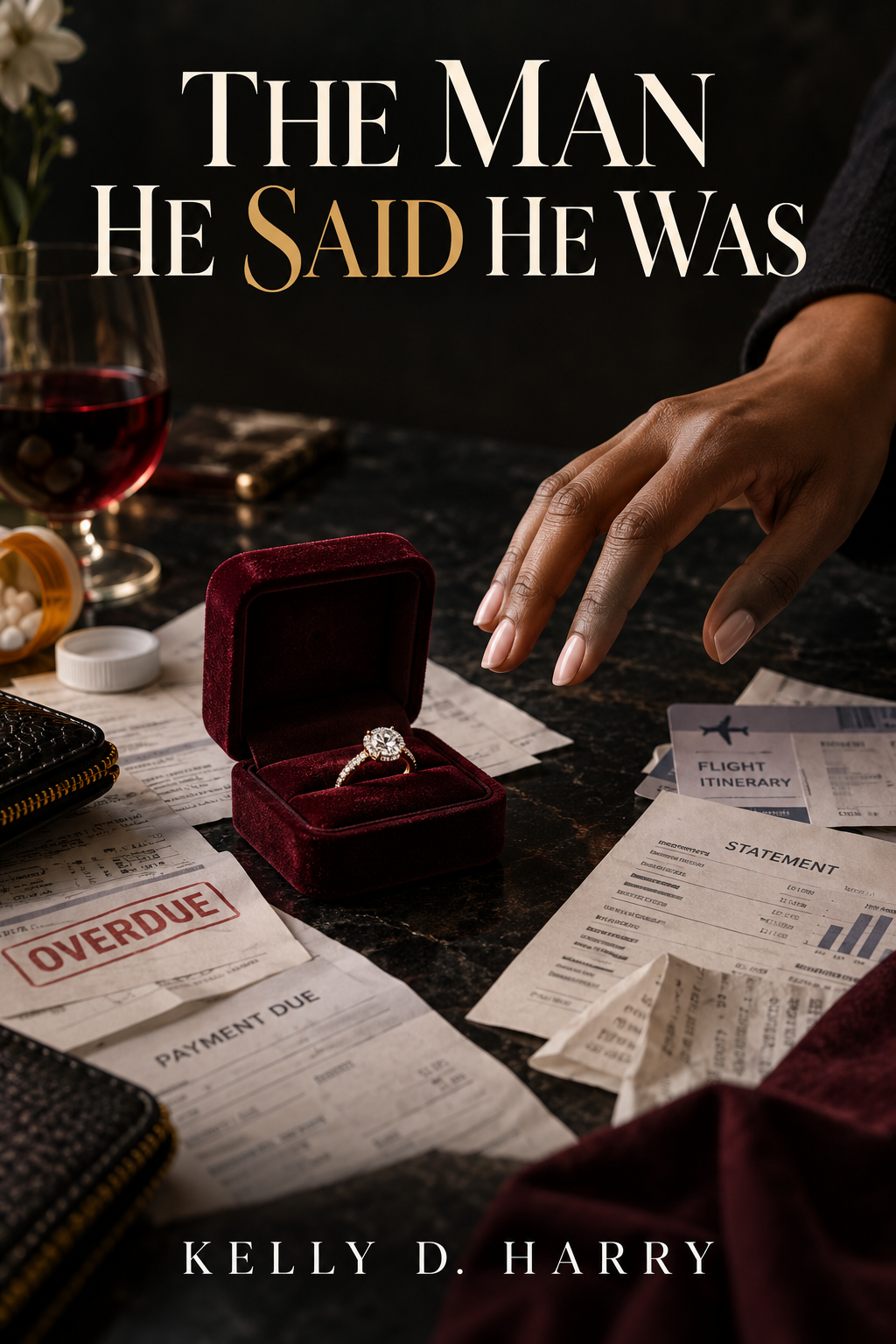
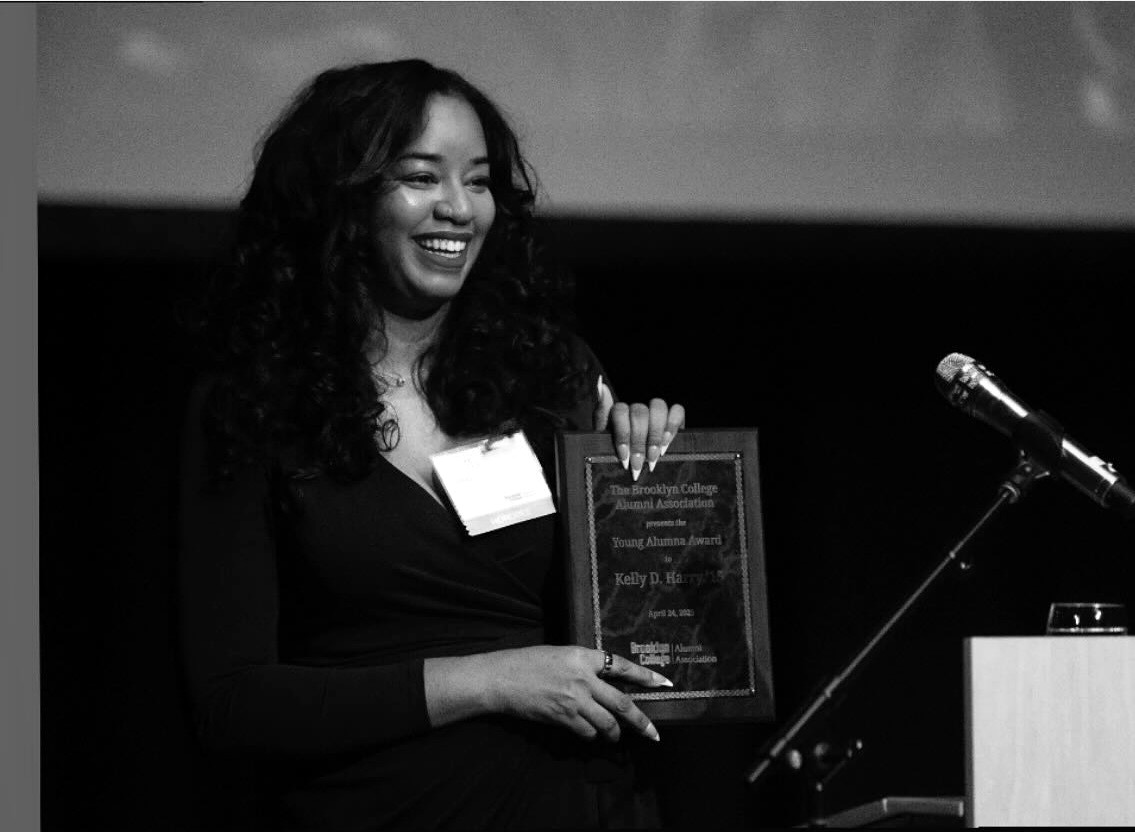
The Man He Said He Was — cover artAuthor photo — Kelly D. Harry

Author photo and cover art cleared for editorial use with credit to Kelly D. Harry.

The book

Title
The Man He Said He Was
Author
Kelly D. Harry
Genre
Literary / contemporary women's fiction
Length
Approximately 81,000 words · 35 chapters plus prologue, epilogue, and author's note
Released
December 20, 2025

When Maya meets Darius at an Atlanta restaurant, he is a grieving son, a decorated veteran, a father trying — a man who seems to feel everything deeply. What she cannot yet see is the distance between the man he describes and the man who shows up. The Man He Said He Was is a love story read in reverse: a woman tracing the shape of a deception back through every tenderness that made it possible, and finding, on the far side of it, herself.

Author bio

Kelly D. Harry is an award-winning Trinidadian-born marketing executive, brand strategist, and storyteller who has spent her career shaping how companies and leaders tell the truth about themselves. The Man He Said He Was is her debut novel — a book about the difference between what a person feels and what a person does, and about the quiet, unglamorous courage of choosing yourself before there is anything left to save.

Press release

For immediate release

Debut novel The Man He Said He Was tells the story of a woman who believed a man's version of himself

ATLANTA — Marketing executive and first-time novelist Kelly D. Harry has released The Man He Said He Was, a literary novel about the distance between what a person feels and what a person does. The book is available to read free online, chapter by chapter, with optional multi-voice audio narration.

The novel follows Maya, an accomplished woman who meets Darius during a family funeral in Atlanta. He is grieving, charming, a father, a veteran — a man who appears to feel everything deeply. Over the months that follow, Maya finds herself holding his obligations, his moods, his daughter's needs, and finally his story about himself. What she discovers is not a single lie but a habit: a man who offers symbols where responsibility belongs.

“I wanted to write about the kind of deception nobody warns you about,” Harry says. “Not the dramatic kind. The kind where someone means what they say in the moment and never does it. That version is harder to leave, because there is always something tender to point at.”

Told in Maya's voice across thirty-five chapters, The Man He Said He Was is a love story read in reverse — closer to Ann Napolitano's domestic intimacy and Jodi Picoult's moral pressure than to thriller. Its subjects are family silence, the labor women absorb without being asked, the children who witness it, and what it costs to leave before there is nothing left to save.

A secondary thread examines military service as identity. The novel's veterans-support page directs readers to Disabled American Veterans, the century-old nonprofit that provides free assistance to veterans and their families.

Talking points

  • Fiction shaped by emotional truth: where the story began, and why it became a novel rather than a memoir.
  • The anatomy of charm — how a person can perform love convincingly, and why intelligent, capable people stay.
  • Writing Darius: building a character who is believable to everyone and accountable to no one.
  • Maya's real arc: not escaping a man, but reclaiming the self she set down to hold his life together.
  • The veteran thread — honoring real service while examining those who wear it as a costume.
  • Children in the middle: what Lena sees, and what adults tell themselves she doesn't.
  • Family silence as infrastructure — how a household organizes itself around one person's unreliability.
  • Why the book is free to read online, and the community of readers growing around it.

Q & A with the author

What is the book about, in one breath?

A capable woman falls in love with a man whose story about himself is better than his conduct, and has to decide whether understanding someone is the same thing as being safe with them.

Is it based on a true story?

It's fiction built on emotional truth. The characters, names, dialogue, and events are invented; the feelings are not.

Why did you write it as a novel?

A memoir would have made it about one man. A novel makes it about a pattern — one a lot of readers recognize before they can name it.

What do you want readers to take away?

That leaving well is not a failure of love. It's often the last honest act of it.

Excerpts

Cleared for quotation in reviews, features, and interviews, with attribution to The Man He Said He Was by Kelly D. Harry.

Prologue — The Shaking

The water moved first.

It trembled in the glass on the coffee table. Then I saw the couch moving beneath him, a small, persistent shudder. Lamplight broke into rings along the water's edge.

Darius lay beneath the gray blanket, his jaw clenched, his eyes open. The hospital bracelet circled his wrist. Six hours earlier, a doctor had said pulmonary embolism while I stood beside the bed holding Darius's phone and his discharge papers. I had gripped them until the paper folded around the phone.

At two in the morning, four floors above a central Florida parking lot, we could hear the apartment's machinery: the air conditioner starting, the refrigerator humming between cycles. A car door shut below. Outside, rain clung to the balcony rail, each drop white under the parking lot lights.

The hospital smell had come home on his skin and clothes: antiseptic, adhesive, a trace of plastic. Beneath it was whiskey, faint but distinct beneath the mint of mouthwash.

The blanket quivered over his chest. Even his feet were shaking.

Read the full prologue

Chapter 1 — Dinner With the Dead

Four years earlier, I met Darius because my friend Nadine was getting divorced and his father had died.

Grief, apparently, has excellent timing.

Nadine had called me from Atlanta, her voice worn thin by months of explaining why she was leaving. Between sentences, I could hear her opening and closing a drawer. I took her to dinner. At least there would be something in front of her she did not have to account for.

We met at a restaurant on Ponce with exposed brick, filament bulbs, and a line that crowded the door. It was early March; people stood in coats with their collars open, letting the damp air reach their throats. Outside, the planting beds smelled of wet earth. Inside, forks struck plates and chairs scraped concrete. Nadine could cry at the table without anyone turning to look.

"My cousin's in town," she said, turning her phone facedown on the hostess stand. "He's here for his father's funeral. Do you mind if he joins us?"

I minded a little. I had come to hear what she could not say on the phone, and a third person would change what she permitted herself. But she was rubbing at a crease in her sleeve, waiting for my answer. I said yes.

Read the full chapter 1

Chapter 16 — What Love Cost

After the argument about Corinne, I began looking at what I paid to keep our life intact. Rent was easy to identify. The rest had entered my accounts under the names of ordinary things.

Half the rent. Most of the furniture. Flights, hotels, rental cars, groceries. Trips I paid for because waiting for him to save meant staying home. Plane tickets for Lena because I would not make a child answer for her father's finances. Gifts I took time to choose. Business expenses he called investments.

Then there were the evenings at my laptop: researching programs, rewriting his emails, finding openings he might qualify for. After each setback, I sat beside him and offered comfort instead of asking whether he had prepared.

The record lived in a shoebox and an app: boarding passes softened at the folds, hotel receipts already fading, the bank's transaction list moving beneath my thumb. Three dollars for coffee. Four hundred for a deposit. Ninety for a flight change, twice in one week, because his plans kept changing.

Whenever I raised the imbalance, Darius reminded me that his paycheck was smaller than mine.

"For now," he would add, as though I had interrupted him.

Read the full chapter 16

Chapter 23 — The Drive Away

By the second night on the couch, my body had reached a decision my mind was still trying to phrase. I did not remember lifting the suitcase or opening the apartment door.

I remembered its wheels striking each stair, loud in the enclosed stairwell, and the shame of hoping no neighbor opened a door. I gripped the railing with my free hand. Somewhere behind me, inside the apartment, Darius called my name once.

I kept moving.

In the car, I locked the doors before starting the engine. My hands were steady on the wheel. I looked at them as though they belonged to someone who had not just watched his body shake.

It was four-forty in the morning. Sprinklers ticked across the apartment lawns, a delivery truck idled at the gate, and a man in a reflective vest hauled a dumpster over the asphalt. Beyond the roofs, the sky had begun to gray. I-4 was nearly empty. The billboards were still selling vacations to nobody.

The emergency call was still on my phone screen. I had given the dispatcher the address, the apartment number, what I had seen. I had stayed long enough to answer the questions. I could not go upstairs again.

Read the full chapter 23

Media contact

Kelly_d_harry@yahoo.com